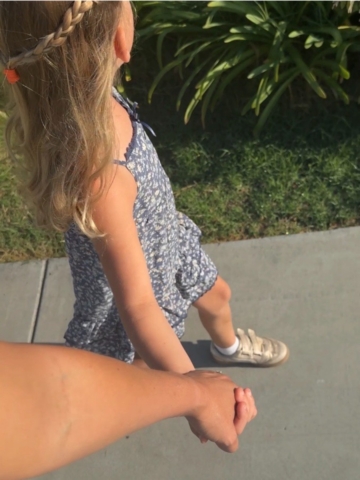
Hopping on a swing and running around a park, Nora Cooney appeared to be a typical 2-year-old.
There were clues, however, that something was amiss.
“She always had a little bit of a limp,” says her mother, Natalie.
Nora was also a late walker and had other developmental delays.
After a physical therapist noticed one of Nora’s legs appeared to be longer than the other, Natalie and her husband, Kevin, saw a doctor.
No, he told them, she appears to be fine.
When the Cooneys, still concerned, ended up visiting the Orthopedic Institute at Rady Children’s Health (RCH), formerly CHOC, they received some definite, although alarming, news.
Nora’s left hip was dislocated.
A complex challenge
Dr. Francois Lalonde, director of orthopedic surgery, explains that Nora’s hip dislocation was associated with acetabular dysplasia, a condition in which the hip socket is abnormally shallow or incorrectly angled due to the fact that the femoral head has not been articulating with the socket for quite some time.
Together, the dislocation and dysplasia created one of the most complex challenges in pediatric orthopedic surgery: restoring the ball of the hip joint to the socket and reshaping the socket so the hip can remain stable as a child grows.
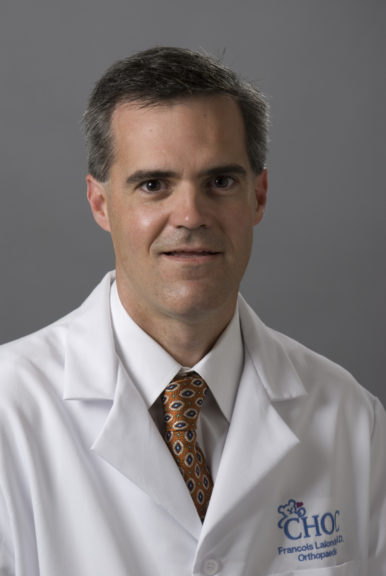
Thankfully, the Cooneys had come to the right place. Dr. Lalonde, with more than two decades of experience at RCH (five at the hospital in San Diego, 16 years in Orange), is recognized internationally as an expert in pediatric orthopedics.
“This is one of the biggest surgeries we do,” Dr. Lalonde says. “You have to throw the kitchen sink at it in terms of surgical management if you want to hit a home run and move to the next level and right the ship.”
High stakes
The stakes are high.
When a child’s hip is dislocated, the ball of the thighbone is no longer seated in the hip socket.
Without the daily pressure of the ball articulating with the socket, acetabular dysplasia then ensues, where the socket remains shallow instead of deepening like it should with growth.
Over time, this can create abnormal pressure and wear on the ball of the thighbone from uneven contact on the side of the pelvis and suboptimal use of the gluteal muscles leading to atrophy, pain, mobility challenges and an increased risk of early degenerative arthritis.
Hip dislocation and dysplasia is diagnosed more often in girls than boys, and some children are born with the condition while others develop the condition over time. In Nora’s case, the dislocated hip had already affected how she walked.
Thanks to RCH’s commitment to emerging technologies that allow specialists like Dr. Lalonde to provide patients with the most accurate diagnoses and state-of-the-art treatments, Nora was in the best position possible to recover from a major surgery and enjoy a meaningful quality of life.
“Fortunately, at Rady Children’s Health we have a lot of expertise with this procedure,” Dr. Lalonde says. “The hip could re-dislocate, but we take all the measures necessary to make sure that doesn’t happen.”
Taking extra steps
In late May 2024, Dr. Lalonde performed extensive hip reconstructive surgery on Nora consisting of two bone cuts (pelvic and femoral) and one soft tissue rebalancing to reduce the dislocated hip and improve the shape and stability of the joint.
The pelvic osteotomy is a bone cut designed to reshape and correctly orient the hip socket over the femoral head once it is reduced in its proper position. The femoral osteotomy involves shortening of a small section of the thighbone to help reduce tension on the ball once it has been placed back into the socket. The femoral cut is then secured with a small plate with screws.
“Not everyone does this,” Dr. Lalonde says of the femoral shortening. “It’s an extra step that’s worth it to prevent a complication that’s not reversible, basically. The more boxes we check off surgically, the better chances a patient has to have a good hip for the future.”
The final step of the procedure consists of opening the hip joint capsule, removing all soft tissue blocks to be able to put the ball back into the socket and then closing the hip capsule with sutures in such a manner as to remove redundant tissue and help stabilize the hip.
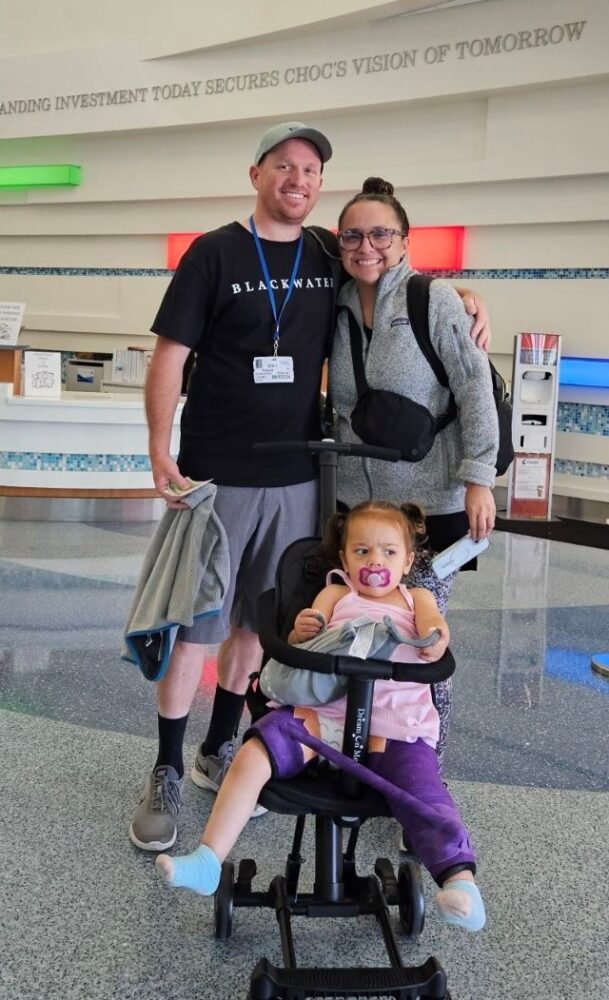
For three months after those procedures, Nora wore a spica cast, which is designed to keep the hip joint and thigh bones immobilized in the correct position while they heal. The spica cast extended from Nora’s waist all the way down her left leg and to her right knee, with a gap in the groin area for diapering and toileting.
At first, the Cooneys were worried that Nora would be miserable in the orthopedic cast. But she adapted well, using a stroller as her mode of transportation and enjoying long walks with her parents.
In November 2025, Dr. Lalonde removed the plates and rods from Nora’s femur via one of her previous incisions along her upper outer thigh. This additional step is necessary about a year after the hip reconstructive surgery to prevent the plate and screws from migrating inside the thigh bone with future growth, which would make removal extremely difficult later as a young adult should the need arise. “The hope after this final step is that we have nearly normalized the hip joint like the dislocation and dysplasia never happened,” Dr. Lalonde says.
Nora was on strict physical restrictions after that procedure until this January.
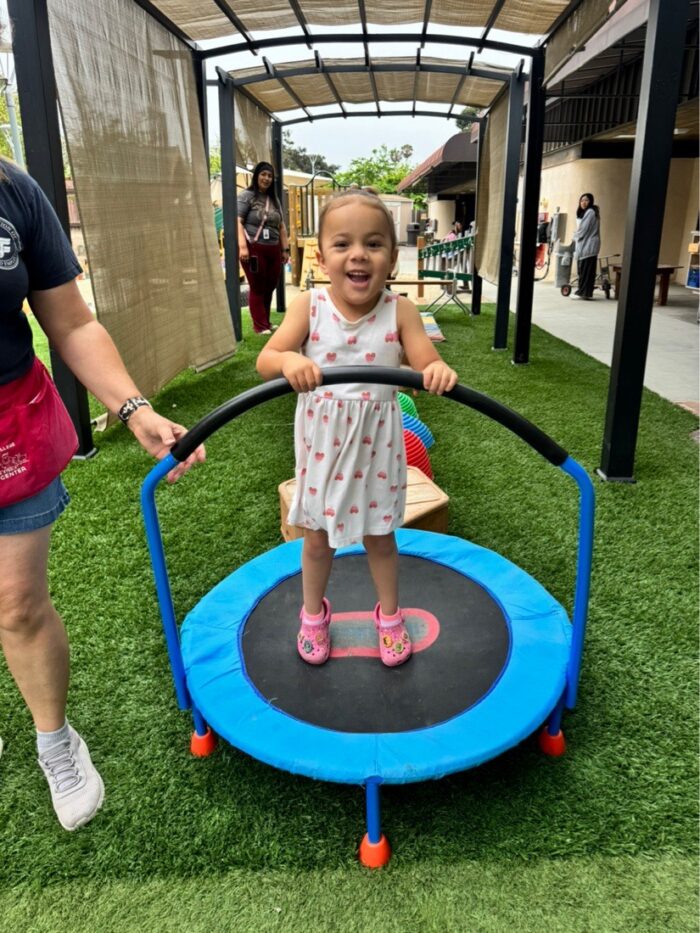
By February, she was jumping on a trampoline.
Praise all around
Nora’s recovery has been remarkable, Dr. Lalonde and her parents say.
He praised the Cooneys for their approach to Nora’s medical journey.
“They took the challenge and ran with it, which is always nice from a surgeon’s perspective,” Dr. Lalonde says. “They asked good questions and were very proactive.”
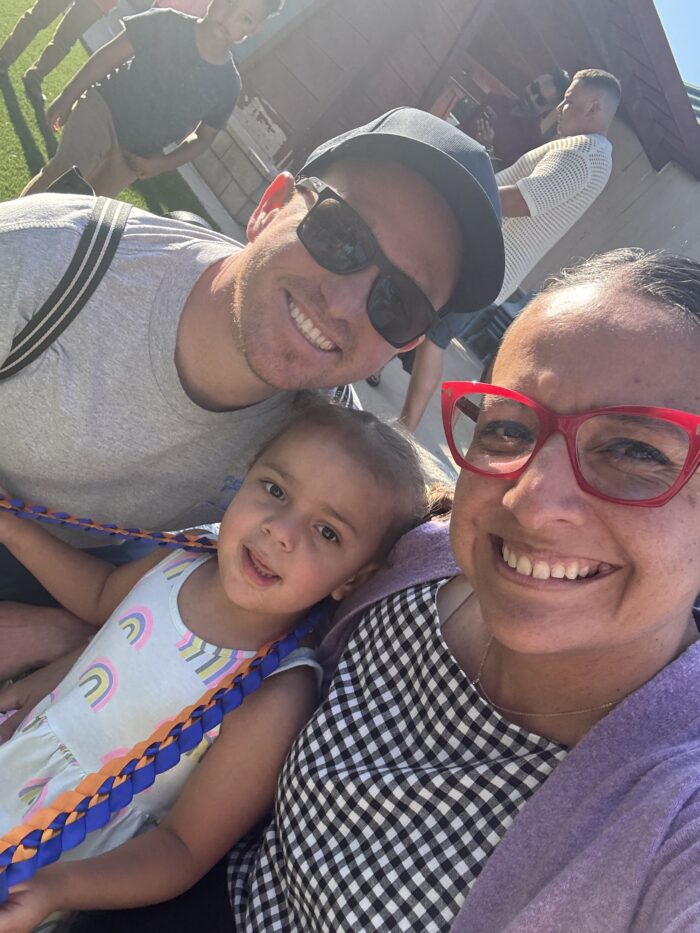
The Cooneys, in turn, praise Dr. Lalonde and the entire care team that took care of Nora, their only child.
“CHOC was great – they are so good with the kids and we were so terrified, much more than Nora was,” Natalie says. “Every step of the way, they were so kind to her. And Dr. Lalonde is very skilled and thorough.”
Says Dr. Lalonde: “It was a pleasure meeting Nora and her parents. I am grateful to have been part of her care and healing journey with respect to her hip condition. The parents were thrilled with the outcome and deeply relieved to know that no further treatment is expected.”