
SAFETY GUIDE
Sun Safety and Skin Protection
Sun protection is essential for protecting kids’ skin from harmful UVA and UVB rays that can damage skin and increase the risk of skin cancer, like melanoma. Developing healthy sun habits early, such as applying sunscreen, wearing protective clothing, and avoiding peak sun hours, is critical. Proper protection helps prevent sunburns and long-term skin damage.
Sun Safety Overview
As much as 80 percent of a person’s lifetime sun exposure occurs by age 18, so protecting your child’s skin from the sun is critical. Teaching kids sun-safe habits early helps ensure their skin stays healthy as they grow.
Protect Your Child’s Skin
Deadly skin cancers are being diagnosed at increasingly younger ages. Researchers have linked this alarming trend to childhood sun exposure. Protective steps you take now will pay off in the years to come:
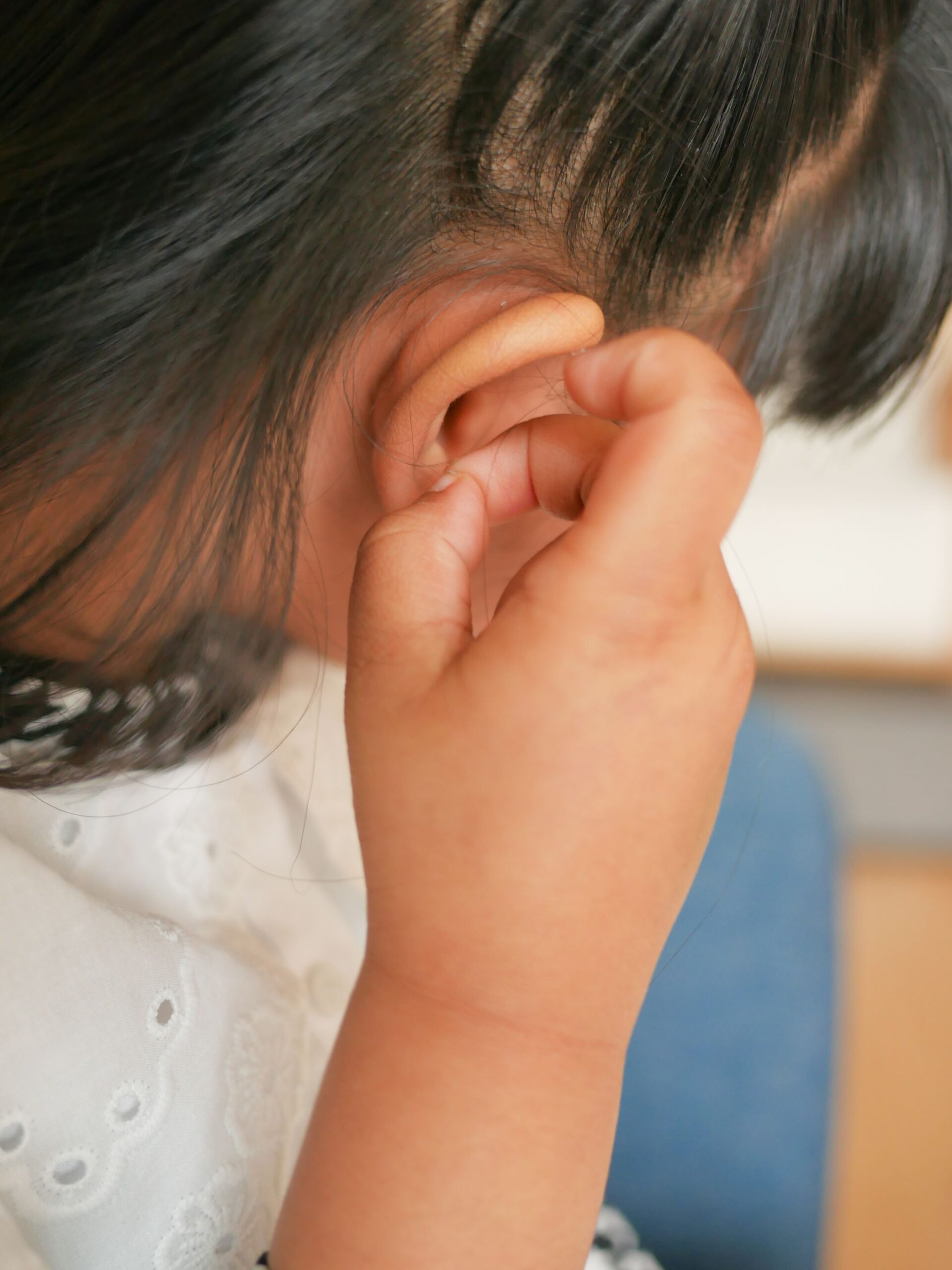
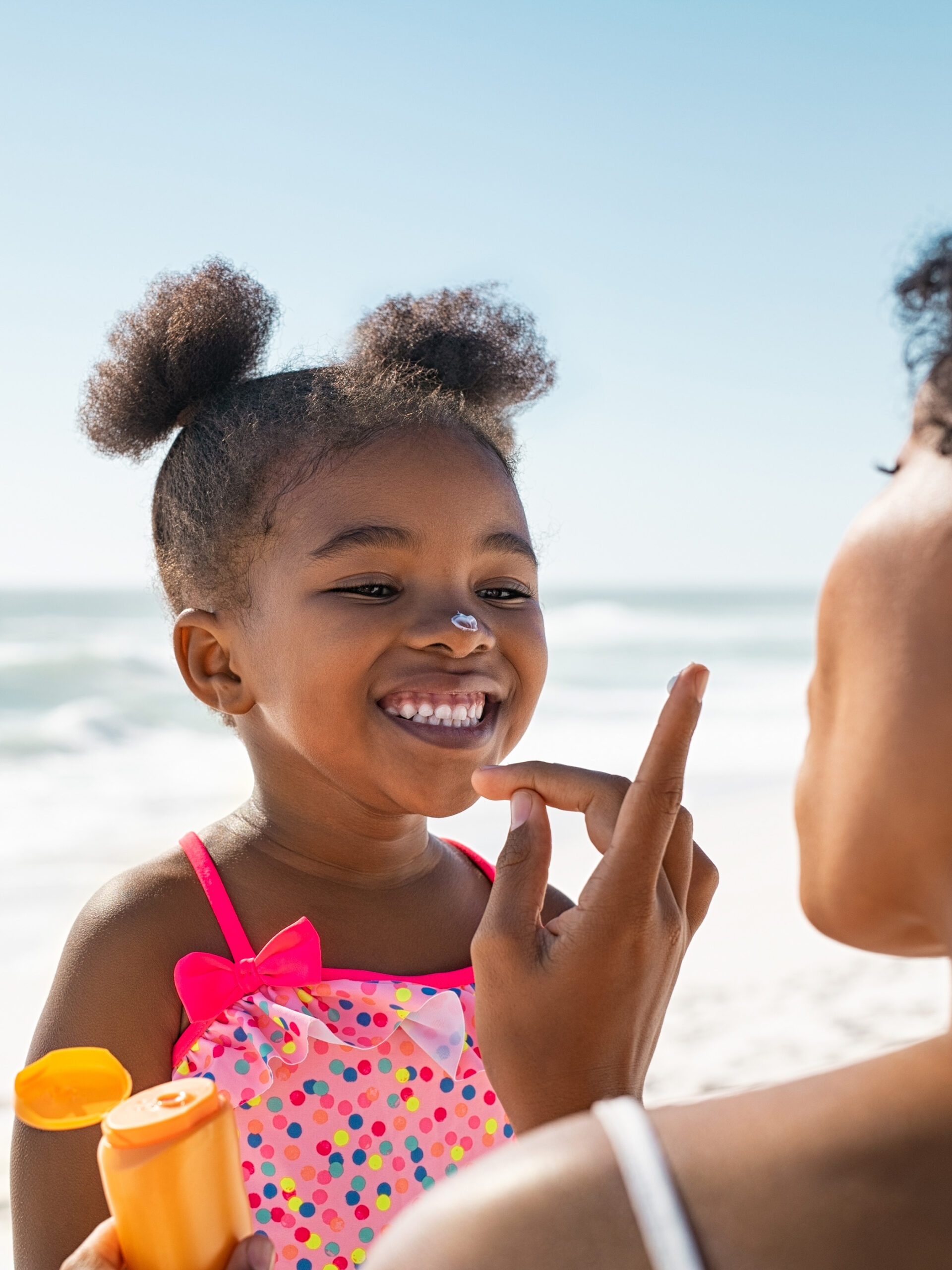
• Slop it on — Apply 30 SPF sunscreen every day. Cover all exposed skin, including hands, ears and the back of the neck. Reapply after swimming or if your child perspires excessively.
• Keep it cool — Schedule outdoor activities before 10 a.m. or after 2 p.m.
• Cover up — Outfit your children with broadbrimmed hats and protective clothing that covers the arms and legs.
• Protect those peepers — Choose real (not toy) sunglasses with polarized lenses for your children.
6 Sun Protection Tips
- Everyone over six months of age should wear sunscreen whenever they’re outdoors, every day of the year. Infants under six months old should be kept out of the sun as their skin is especially susceptible to sun damage.
- Apply sunscreen with SPF 30 at least 15 to 30 minutes before you go outside
- The sun is everywhere, so apply sunscreen everywhere. Don’t forget your hands, nose and ears.
- Reapply every two hours, and after swimming, sweating or toweling off.
- Wear a wide-brimmed hat and sunglasses for extra protection.
- Double-check medications, as some may cause a greater sensitivity to sunlight.
There are other precautions you can take to minimize harmful sun exposure.
- Limit time spent outdoors between the hours of 10 a.m. and 4 p.m.
- Avoid tanning oils or salons- tanning increases the risk of melanoma and accelerates skin aging.
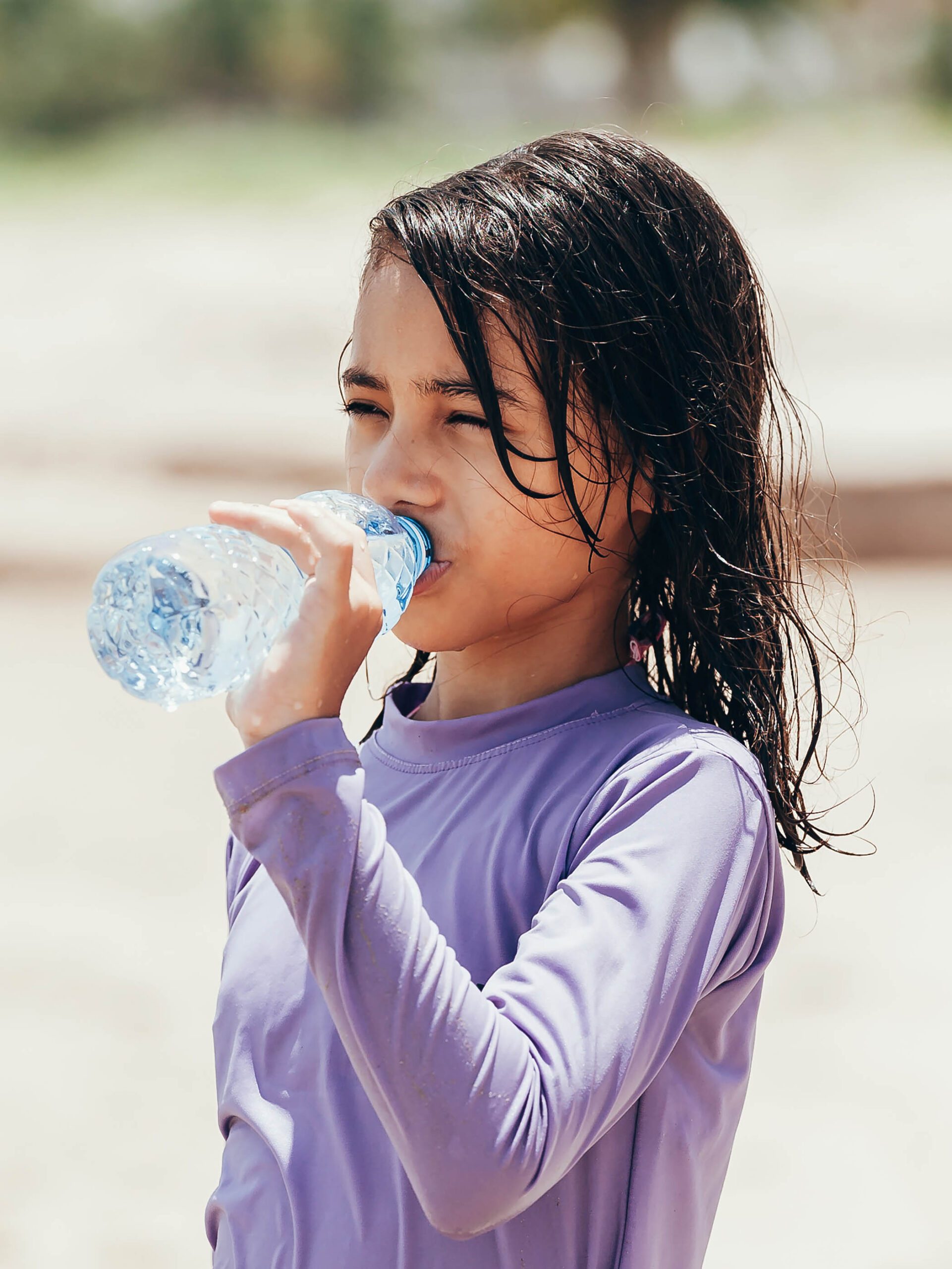
- Drink plenty of water throughout the day to avoid dehydration, which could make it harder to produce sweat and cool down your body.

Choosing the Right Sunscreen
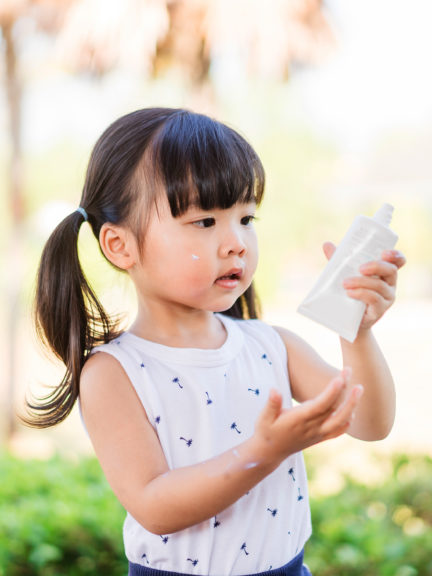
From splash pads to soccer practice, sunscreen is your child’s everyday defense against UV rays. For everyday protection, dermatologists recommend a broad-spectrum sunscreen with at least SPF 30. Most sunscreens fall into one of two categories, and both are safe and effective when used as directed:
- Mineral Sunscreens: Sit on top of the skin and reflect UV rays, using ingredients like zinc oxide or titanium dioxide. They are often the gentlest choice for babies, toddlers and children with sensitive skin.
- Chemical Sunscreens: Absorb UV rays and tend to feel lighter, which some kids prefer for sports and everyday wear. Apply them about 15 minutes before heading outside so they have time to activate and reapply after swimming or sweating.
There is no single “best” formula for every family. The most effective sunscreen is simply the one your child will wear consistently, so pick a texture and format they do not mind putting on. And remember that sunscreen works best alongside other habits: protective clothing, a wide-brimmed hat, sunglasses and shade during peak hours.
Sun Protection Factor (SPF)
SPF stands for Sun Protection Factor. It tells you how well a sunscreen helps protect your child’s skin from the sun’s UVB rays, which are the main cause of sunburn.
For everyday use, dermatologists recommend choosing a broad-spectrum sunscreen with at least SPF 30, which blocks about 97% of UVB rays. Higher SPF offers slightly more protection, but no sunscreen blocks 100% of UV rays.
No matter which SPF you choose, sunscreen only works when it’s applied correctly. Apply generously 30 minutes before heading outside, cover all exposed skin and reapply every two hours.
Sunscreen and Sun Safety by Age
Children’s skin changes as they grow, so sun protection looks a little different at each stage.
- Infants Under 6 Months: Sun safety for babies this young starts with shade, not sunscreen. Their skin is especially delicate, and sunscreen is not recommended before 6 months of age. Keep infants out of direct sunlight and rely on lightweight clothing, a wide-brimmed hat and a stroller canopy for cover.
- Babies 6 Months to Toddlers: Once your baby reaches 6 months, a mineral baby sunscreen with zinc oxide or titanium dioxide is often the gentlest option for delicate skin. Pair sunscreen with hats, protective clothing and plenty of shade, since little ones rarely hold still for reapplication.
- Kids and Teens: Older children and teens can use either mineral or chemical kid’s sunscreens. This is a great age to build independence by teaching them to apply, and reapply, their own sunscreen before sports, recess and time with friends.
Is sunscreen safe?
You may have seen claims online questioning whether sunscreen is safe, or suggesting the ingredients are harmful. Here is the reassuring answer from our dermatology experts, when used as directed, sunscreen is a safe and effective way to protect your child from UV damage. The far greater risk to your child’s skin is unprotected sun exposure.
If you still have concerns about specific ingredients, a mineral sunscreen with zinc oxide or titanium dioxide is a great choice, since it sits on top of the skin rather than absorbing into it. What matters most is that your child wears sunscreen consistently.

Understanding UV and the UV Index
Understanding how UV rays work helps your family make confident, everyday decisions about sun protection.
What are UV rays?
UV (ultraviolet) rays are an invisible form of energy that comes from the sun. You cannot see or feel them the way you do sunlight or heat, which is part of why sun damage can happen without you realizing it.
Sunlight includes two main types of UV rays that reach the skin:
- UVB Rays: The primary cause of sunburn.
- UVA Rays: Reach deeper into the skin, are linked to long-term skin aging, and can even pass through glass, such as car and home windows.
Both can damage skin over time. Because UV exposure in childhood adds up, understanding UV safety can help lower their risk of skin damage and skin cancer later in life.
What is the UV Index?
The UV Index is a daily scale that measures how strong the sun’s UV rays are, usually from 1 (low) to 11 or higher (extreme). It is an easy tool families can use to plan outdoor activities and decide how much protection kids need that day. Checking the daily UV Index before spending extended time outside is a simple habit that supports everyday UV safety.
The UV Index helps you understand when extra sun protection is needed, but it should never be used to find the “best” time to tan. There is no safe way to tan. A tan is a sign of skin damage from UV exposure, and that damage can happen even on cloudy days or when the UV Index is lower. Think of the UV Index as a tool to help protect your family’s skin, not a way to find the “best” time to tan.
UV Exposure Myths
A couple of everyday myths can catch families off guard:
- Cloudy days are not safe days. UV rays pass through clouds, so sun protection still matters when skies are overcast.
- Shade alone is not full coverage. UV rays reflect off water, sand and concrete, which can increase exposure even when kids are sitting in the shade.
- Water is not a barrier. Kids can still get UV exposure while swimming, since rays reach through the surface of the water. Water also washes sunscreen away quickly, so reapply after swimming or toweling off.
- There is no such thing as a healthy base tan. A tan is a sign of skin damage, not a shield against it.
- The sun still reaches indoors and in the car. UVA rays can pass through windows at home and in the car, so kids can get exposure even on a long drive.
Sunburns and Sun-Related Skin Reactions
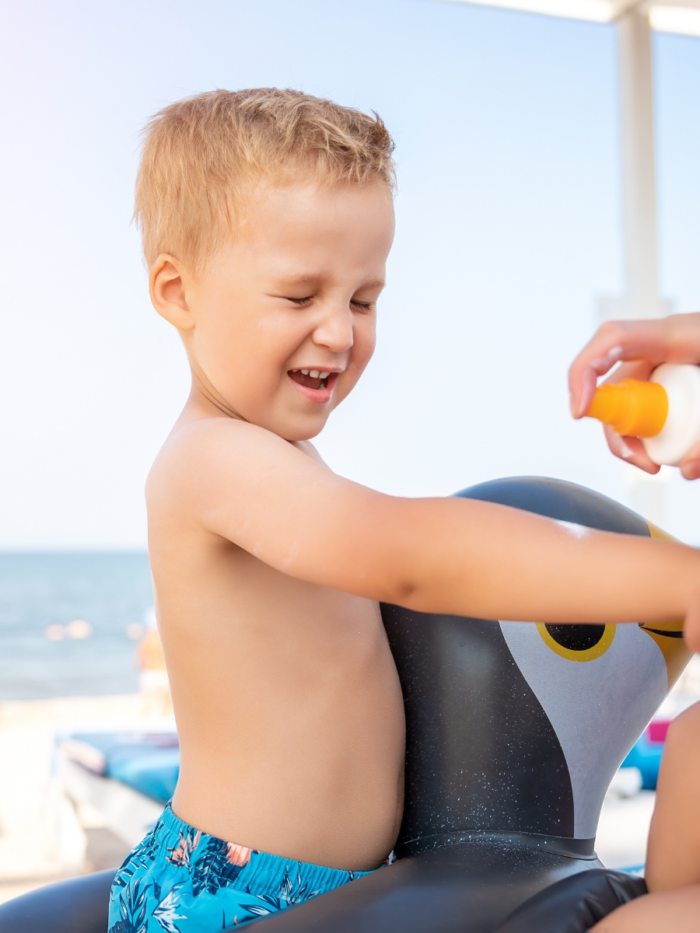
Even with a great sun protection routine, kids will occasionally come home with a sunburn or a bit of irritated skin. Most of the time it can be soothed right at home. Knowing what to look for, and when a reaction needs a closer look, helps you respond with confidence.
Recognizing common sun-related skin reactions
Not every skin reaction after a day outside is a typical sunburn. Kids can also experience:
- Sun Rash or Sun Poisoning (photosensitivity): An itchy rash, redness or small bumps that can appear after even limited sun exposure. A sun rash on a toddler can be easy to miss, since little ones cannot always tell you how they feel.
- Heat Rash: Small red or clear bumps that show up where sweat gets trapped, often in skin folds or under clothing.
- Medication-Related Sun Sensitivity: Some medications can make skin more likely to burn or react, so it is worth checking labels before extended time outdoors.
Call your pediatrician or seek medical care if your child has severe blistering, a fever, signs of dehydration, spreading redness, or any signs of infection.
Caring for sunburns at home
For everyday sunburn relief for kids, a few gentle steps can ease the sting while skin heals:
- Cool the skin with a cool bath or a soft, damp cloth.
- Offer plenty of water to keep your child hydrated.
- Moisturize with a gentle lotion or pure aloe vera.
- Manage discomfort as directed by your pediatrician.
- Keep healing skin covered and out of the sun.
Kids and Melanoma
Orange County is one of the sunniest places in California, with hundreds of sun days per year. With that comes the need for protection. Improper protection can increase risk for skin cancer. To ward off harmful UVA and UVB rays, use about an ounce of sunscreen for each area of exposed skin, i.e. leg or arm.
Fast Facts
- Cases of skin cancer in the U.S. every year: 1.3 Million
- Percentage of sun rays blocked when SPF 30 is applied: 90%
- Time of day when the sun is the strongest: 10am – 4pm
Melanoma
Melanoma accounts for 4% of all skin cancers. Malignant (life-threatening) melanoma starts in cells that produce pigment (color) in the skin. It usually begins as a mole that turns cancerous. People with all skin types may be affected, but those who are fair-skinned and burn easily are at a higher risk.
The ABCDs of Moles
Although melanoma is still rare in kids, parents should make checking for moles part of their monthly routine. Look for asymmetry, border, color and diameter.
With early detection, melanoma is curable, so be safe and use common sense in the sun:
- Apply sunscreen, even on infants 6 months and older
- Wear wide-brimmed hats
- Protect your eyes, wear sunglasses

Sun Safety Tip Sheets
Print these tip sheets for quick and easy reference. Brought to you by the pediatric experts at Rady Children’s Health.

Sun Safety
Tip Sheet
La seguridad bajo el sol
Find a CHOC Primary Care Pediatrician
From babies to teens, pediatricians from CHOC’s Primary Care Network partner with parents to offer immunizations, sick visits, sports physicals and more.
Sun Safety and Skin Protection Resources
Essential tips to help your kids stay safe, healthy and active all summer long.
Sun & UV Safety
Water Safety & Downing Prevention
Heat & Hydration
Safety guides
- Bike and helmet safety guide
- Car and travel safety
- Sun safety and skin protection guide
- Home and window safety guide
- Water safety and drowning prevention
Additional Resources
Safety Education Classes
CHOC’s community education department offers a variety of classes and programs designed to keep you and your child safe and healthy, including:
- School programs that can be brought to your school or group at no cost
- Safe Sitter, a nationally accredited childcare course
- “Three Tragic Seconds” drowning prevention program
- Child passenger safety class





The guidance on this page has been clinically reviewed by CHOC pediatric experts.
For more health and wellness resources from the pediatric experts at CHOC:
Sign up for the Kids Health newsletter.
The contents of this webpage, including text, graphics, audio files, and videos (“Materials”), are for your general information only. The Materials are not intended to substitute qualified professional or medical advice, diagnoses, or treatments. CHOC does not recommend or endorse any specific tests, physicians, products, procedures, or other information that may be mentioned on or linked to this webpage. Always call your physician or another qualified health provider if you have any questions or problems. If you think you may have a medical emergency, call your doctor, go to the nearest emergency department, or call 911.
For more health information for your family visit health.choc.org