
SAFETY GUIDE
Guide to E-Bike Safety for California Kids and Teens
As e-bikes become more popular with kids and teens, e-bike injuries are rising too. In 2025, our Orange County emergency department treated 201 children for e-bike injuries, compared with only one in 2021. Find out what to know before your child hops on an e-bike, from bike types and speeds to tips for preventing serious injuries, plus the California statewide and Southern California city laws you need to know.
E-Bike Overview
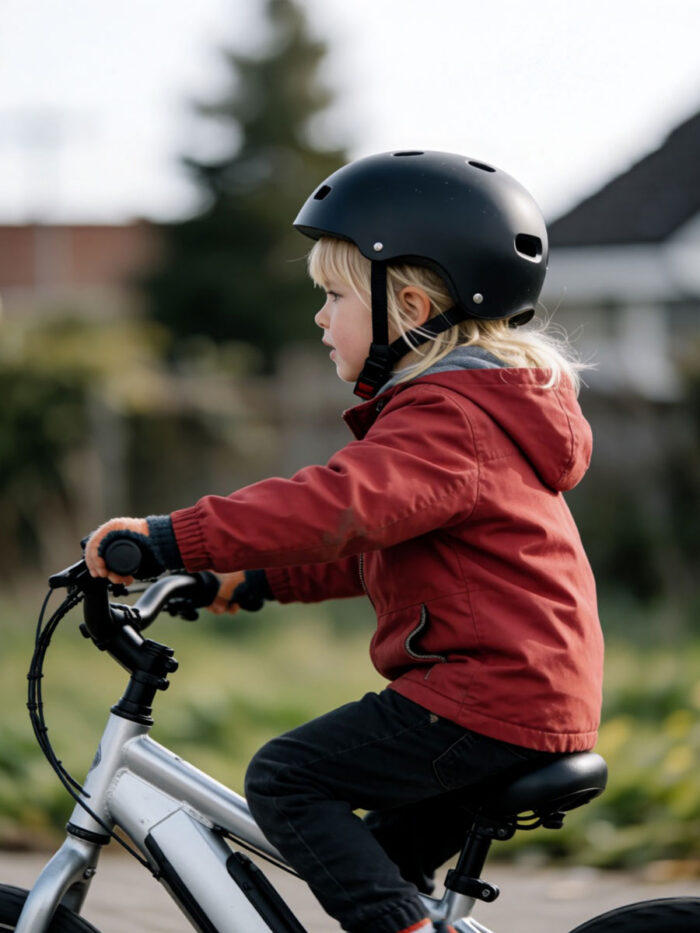
An e-bike is a bicycle with an electric motor that helps power the bike. California groups e-bikes into three classes based on their speed and how the motor works. Your child’s e-bike class affects where they can ride, age requirements, and other rules.
Three E-Bike Classes
| Class 1 | Class 2 | Class 3 | |
| How it works | The motor only works while the rider pedals. No throttle. | A throttle can power the bike without the rider pedaling. | The motor only works while the rider pedals. No throttle. |
| Top assisted speed | 20 mph | 20 mph | 28 mph |
| Age requirement | No statewide minimum* | No statewide minimum* | Rider must be 16 or older |
| Where you can ride | Generally, anywhere traditional bikes are allowed. | Generally, anywhere traditional bikes are allowed, though some trails may restrict them. | More restricted because of higher speeds; generally, roads and street adjacent bike lanes. |
What’s the difference between an e-bike and an e-moto?
The terms “e-bike” and “e-moto” are sometimes used interchangeably, but they are not the same. In California, an e-bike must meet specific requirements (see above) to qualify as a Class 1, 2 or 3 e-bike.
Some electric two-wheelers may look like e-bikes but are designed to go faster or have more power than the law allows. These are sometimes called “e-motos” or electric motorcycles and may be considered motor vehicles instead of e-bikes.
When choosing a bike for your child, be sure to check its specifications and e-bike classification. Don’t rely on how the seller markets it.
Important things to consider before getting your child an e-bike
An e-bike is not just a faster bicycle. Its motor allows riders to reach higher speeds more quickly, changing how long it takes to stop and how much force is involved in a crash. This can increase the risk of serious injury. In fact, e-bike injuries can be as serious as injuries from motor vehicle crashes.
For young riders, these speeds can be especially risky. Kids may be able to reach 20 mph or more before they have the experience and judgment to safely handle traffic, intersections and unexpected hazards. That’s why our injury prevention team does not recommend e-bikes for children under 12. In the City of San Diego and several other San Diego County cities, riders under 12 are now prohibited by law from operating Class 1 and Class 2 e-bikes.
Before handing over an e-bike, consider whether your child can consistently follow traffic rules, judge speed and distance at intersections, resist riding with friends on the handlebars, and remember a helmet every time.

Insights from our Trauma Teens
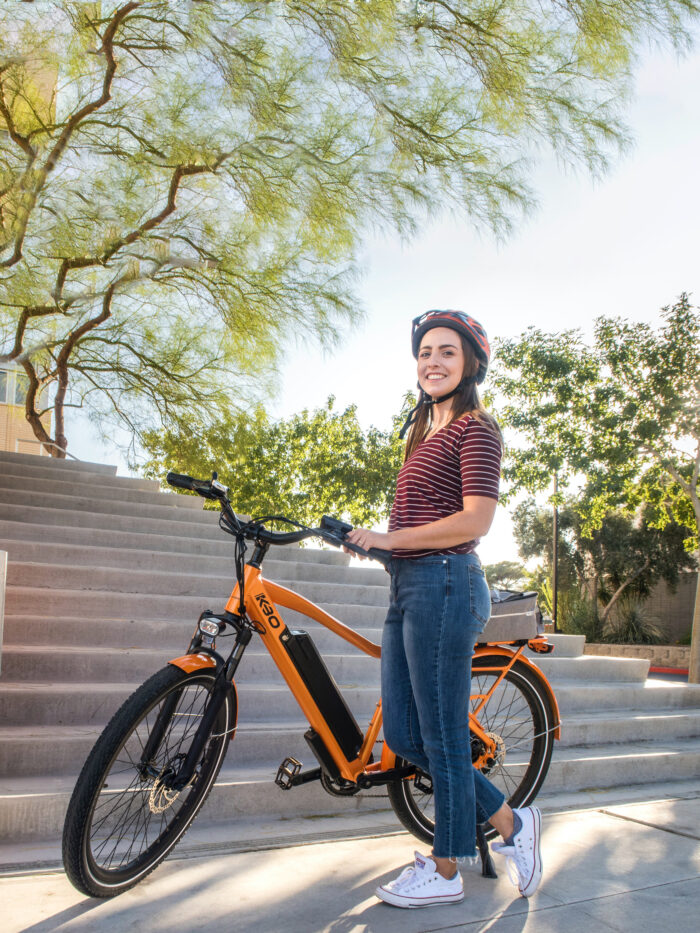
E-bike crashes have gone from rare to routine at both of our trauma centers over the past four years. In Orange County, they are now the leading reason children arrive as trauma patients, surpassing falls, motor vehicle collisions and pedestrian collisions.
Our national research also shows that speed matters. Children in higher-speed e-bike crashes were more likely to have head, neck or facial injuries (49.1% vs. 28.7%) and internal organ injuries (24.1% vs. 10.4%). They were also more likely to need hospital care.
What are the most common e-bike injuries in kids?
Among pediatric e-bike injuries treated at Rady Children’s, the most common are:
- Concussions
- Arm/Leg Fractures
- Skull Fractures
- Facial Fractures
While not the most common, internal injuries are the reason a crash deserves attention even when a child seems fine. If your child crashes at speed, call your pediatrician, and go to the nearest emergency department if you are concerned.
Featured Articles
A Comprehensive Guide to E-Bike Safety
E-bikes may look like regular bicycles, but they can reach higher speeds and require more judgment and control. Some common misconceptions can lead parents and young riders to underestimate the risk of serious injury, however, a few simple habits can lower your child’s risk of serious injury.
Use these safety tips to help your child ride safely, stay visible, and properly care for their e-bike.
Always Wear a Helmet
Only about half of the children treated for e-bike injuries in our Orange County emergency department were wearing a helmet. A properly fitted and buckled helmet can help protect against serious head injuries, however helmets alone are not enough to prevent serious E-bike injuries.
- Look for a certified helmet. At a minimum, choose one certified by the Consumer Product Safety Commission (CPSC). Look for the certification label inside the helmet.
- Consider added protection for higher speeds. Helmets certified to NTA 8776 or ASTM F1952 are designed for more severe impacts and provide greater coverage.
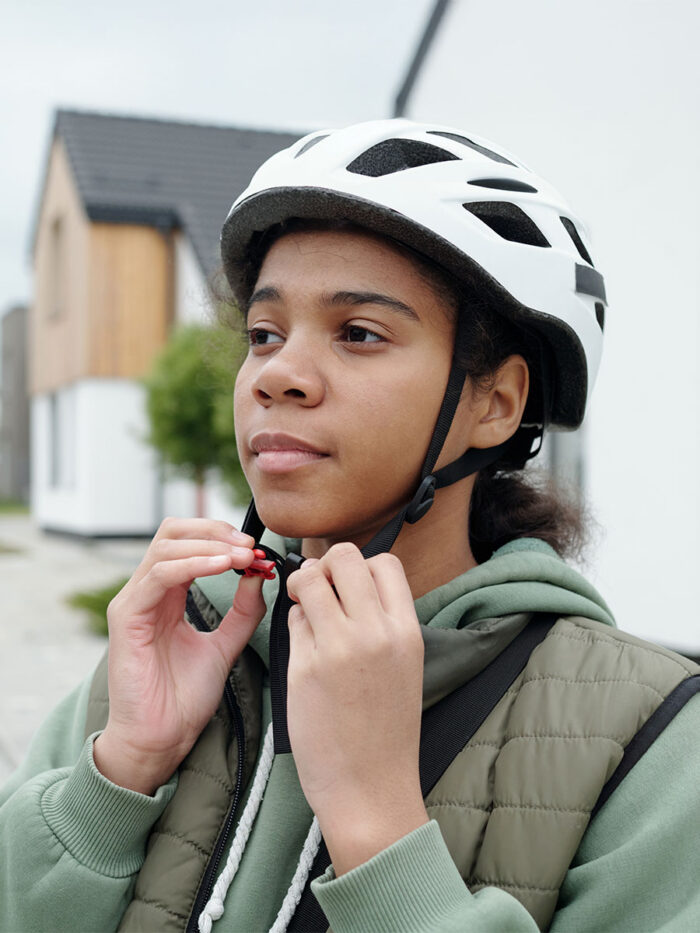
- Make sure it fits and is buckled. A helmet should fit snugly and sit level on the head. Always buckle the chin strap before riding. A proper fitting helmet looks like:
- Space for 2 fingers above the eyebrows
- No slack so the straps form a V below each ear
- Space for 1 finger fits between the chin and strap
- Replace it after a significant impact. A helmet may no longer provide the same protection after a serious hit, even if it looks fine.

Stay Visible
Kids riding e-bikes should always assume drivers may not see them. However, these steps can help make them more visible:
- Use lights and reflectors. California requires bikes to have a red rear reflector or a red light with a built-in reflector. Using front and rear lights can make riders even easier to see.
- Wear bright or reflective clothing. Bright, fluorescent colors can help riders stand out. Reflective clothing or tape can improve visibility at dusk or in low light.
- Consider a rearview radar. These devices can alert riders when a vehicle is approaching from behind.
Follow Road Safety
There is no test or license required to ride most e-bikes, but riders still need to know and follow basic rules of the road to stay safe. Make sure your child knows how to:
- Ride at a safe speed. Our research found that crashes above 20 mph were more likely to cause head, neck, or facial injuries. If the e-bike allows it, consider setting a lower top speed.
- Ride one person per bike. Carrying a passenger can make the bike harder to control and increase the risk of a fall.
- Ride with traffic. Never ride against traffic and stop at every stop sign and red light. Walk the bike across busy intersections.
- Use bike lanes and designated routes. Check your local rules about riding on sidewalks.
Protect the Battery
E-bikes run use lithium-ion batteries, which can catch fire if damaged, poorly made or charged carelessly. A few habits can drastically reduce that risk.
- Choose a certified battery. Look for a recognized safety certification, such as UL. Uncertified e-bike batteries cannot legally be sold in California in 2026.
- Unplug the battery when it is fully charged. Don’t leave it charging longer than needed.
- Charge away from anything that can catch fire. Keep batteries away from flammable materials while charging.
- Keep batteries out of extreme heat. Don’t store them in direct sunlight or inside a hot vehicle.

Free E-Bike Safety Training
Our goal is not to discourage e-bikes, but to help younger riders stay safe. These free courses and programs can help you educate kids and teens on safer riding skills:
- RideReadySD: This online course from Rady Children’s covers rules of the road, bike lanes, helmet use and avoiding distractions. Start the course
- California Highway Patrol Vulnerable Road Users course: This online e-bike safety course can also satisfy the citation-waiver requirement for minors. Visit CHP
- Rady Children’s community education classes: Free safety programs available for schools and community groups. Learn about our classes
- Local law enforcement classes: Some Orange County agencies offer hands-on e-bike safety classes for teens. Check with your local agency.
California E-Bike Laws & Local Regulations
Now that you know the basics of e-bike safety, let’s talk about the rules. California has statewide e-bike laws, but cities can add their own restrictions. Be sure to check the local laws anywhere your child rides, not just where you live.
At a minimum, California Law requires the following:
- Lights and reflectors at all hours. Every e-bike must now have a red rear reflector, or a solid or flashing red light with a built-in reflector, used during all hours of operation, not just after dark (AB 544).
- Always wear a buckled helmet. Anyone under 18 must wear a helmet while riding a bike or e-bike, including as a passenger. On a Class 3 e-bike, helmets are required for every rider regardless of age. A helmet that is not buckled does not count.
- Tight class definitions. SB 1271 narrowed the legal definitions of each class, so bikes that previously slipped through while exceeding the limits no longer qualify.
- Certified batteries. E-bike batteries must carry a recognized safety certification such as UL (the Standard for Electrical Systems for eBikes)
- A course instead of a fine. Minors cited for a helmet violation can clear the fine by completing the California Highway Patrol’s online e-bike safety course.
Do you need a license to ride an e-bike?
No. You do not need a driver’s license, registration, or insurance to ride a Class 1, 2, or 3 e-bike in California. But the bike must meet California’s legal definition of an e-bike. A bike with a motor over 750 watts or one that exceeds the legal speed limits may be considered a motor vehicle instead. In that case, different licensing, registration and insurance requirements apply.
A quick guide to, California E-bike-laws
| What to check | Legal in California | Not Legal in California |
| Motor Power | 750 watts or less | More than 750 watts |
| Pedals | Fully operable pedals | No pedals, or pedals that do not work |
| Top Assisted Speed | Motor stops assisting at 20 mph on Class 1 and 2, or 28 mph on Class 3 | Motor keeps assisting past 28 mph |
| Speed Limiter | Factory limiter intact | Limiter removed, bypassed, or unlocked |
| Throttle | Allowed on Class 2 | Fitted to a bike sold as Class 1 or 2 |
| Class 3 Equipment | Speedometer fitted | No speedometer on a 28-mph bike |
| Battery | Certified, carrying a recognized safety label such as UL | Uncertified battery, which cannot legally be sold in 2026 |
| Lights | Red rear reflector, or a solid or flashing red light with a built-in reflector, used at all hours | No rear reflector or light, or used only after dark |
| Rider Age | 16 or older for Class 3. Local ordinances may set a minimum of 12 for Class 1 and 2 | Under 16 on a Class 3. Under 12 where a local ordinance prohibits it |
| Passengers | Only where the bike has a permanent, manufacturer-installed second seat | Any passenger, otherwise, and never on a Class 3 |
| Helmet | Worn and buckled by every rider under 18, and by all riders on Class 3 | Un-helmeted rider under 18, or any un-helmeted Class 3 rider |
Orange County E-Bike Rules
More than half of Orange County cities have adopted their own e-bike rules, and they vary by city. Common restrictions include speed limits on sidewalks and trails, helmet requirements, limits on where e-bikes can be ridden, and penalties for violations by minors.
- Newport Beach: Limits e-bike riding on certain sidewalks and has penalties for violations by minors.
- Huntington Beach: Allows police to impound e-bikes and issue fines of up to $400. The city also offers e-bike safety education for young riders.
- Irvine: Has speed limits for sidewalks and trails and escalating penalties for repeat violations. Parents may also be cited or fined for a child’s violation.
- Other cities: Stanton, Yorba Linda, Orange, Buena Park, Lake Forest, San Clemente, Seal Beach and Fullerton have adopted or proposed their own rules.
Not sure about your local rules? The Orange County Transportation Authority maintains a city-by-city guide to local e-bike ordinances and runs e-bike safety rodeos and virtual workshops for families through its E-Bike Safety Plan. See OCTA e-bike resources
San Diego E-Bike Rules
The City of San Diego’s new e-bike ordinance took effect August 13, 2026. Similar rules have been adopted or approved in several other cities across San Diego County.
- Children under 12 cannot ride Class 1 or Class 2 e-bikes on public streets, paths or rights-of-way in cities where these ordinances apply.
- Enforcement starts with education. In the City of San Diego, officers will issue warnings during a 60-day grace period. Beginning October 12, 2026, violations may result in a $25 citation.
- Riders may take a safety course instead of paying the fine. Anyone cited can complete an e-bike safety course to clear the citation.
Check the rules where your child rides. The San Diego Transportation Authority maintains resources for local e-bike ordinances and other guidelines. See SDTA e-bike resources.

Modifying E-Bikes
Before modifying an e-bike, know how those changes can affect both safety and the law. Removing a speed limiter or increasing the bike’s power can increase the risk of serious injury. It may also mean the bike no longer meets California’s definition of an e-bike and is instead considered a motor vehicle, with different licensing, registration and insurance requirements.
This is also where the difference between an e-bike and an electric motorcycle, sometimes called an “e-moto,” matters. Some electric two-wheelers may look like e-bikes but are built to exceed legal e-bike limits. Others may start as legal e-bikes but no longer qualify after they are modified. Either way, parents should check the bike’s power, speed and equipment before purchasing an electric vehicle for their child.
Parents can also be held responsible for a child’s violations. Depending on the circumstances, parents may be cited or fined, and the bike may be impounded. In serious cases involving illegal electric motorcycles, parents have faced criminal charges.

E-bike Safety Tip Sheets
Print these tip sheets for quick and easy reference. Brought to you by the pediatric experts at Rady Children’s Health.
E-bike safety toolkit for families (PDF)
E-bike injuries treated by Trauma Services (PDF)
La seguridad con los cascos (ES)
View all safety printable handouts

Rady Children’s Health Safety Resources
Safety Guides
Related articles
Research from our trauma teams
For clinicians and families who want the underlying data.
Safety Education Classes
Rady Children’s community education department offers a variety of classes and programs designed to keep you and your child safe and healthy, including school programs offered at no cost, Safe Sitter, drowning prevention and child passenger safety.
To speak with an injury prevention specialist, contact the Rady Children’s injury prevention program. [Confirm the public-facing number per campus. Car and Travel Safety lists 714-509-8887 for community education in Orange County.]
The guidance on this page has been clinically reviewed by CHOC pediatric experts.
For more health and wellness resources from the pediatric experts at CHOC:
Sign up for the Kids Health newsletter.
The contents of this webpage, including text, graphics, audio files, and videos (“Materials”), are for your general information only. The Materials are not intended to substitute qualified professional or medical advice, diagnoses, or treatments. CHOC does not recommend or endorse any specific tests, physicians, products, procedures, or other information that may be mentioned on or linked to this webpage. Always call your physician or another qualified health provider if you have any questions or problems. If you think you may have a medical emergency, call your doctor, go to the nearest emergency department, or call 911.
For more health information for your family visit health.choc.org