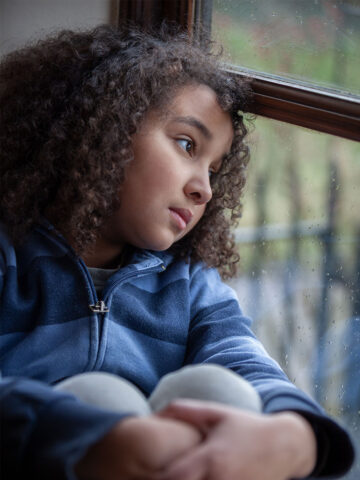
Transitioning from carefree summer days into a structured school day can be stressful for children. Going back to school can be nerve-racking for children and teens as they navigate new environments, faces and expectations.
Many parents wonder if kids are faking these feelings to get out of going, but back-to-school anxiety is a real phenomenon, says Dr. Christopher Min, a pediatric psychologist at CHOC. Back to school anxiety occurs when nervousness goes into overdrive, causing physical, behavioral or cognitive consequences that can impact a child’s mindset and ability to perform in school.
“It’s easy for us as adults to forget what it’s like to be a kid,” Min says. “It can be really scary.”

A child’s job is to go to school, Min says, and their workload doesn’t simply include academics. School helps children develop social skills and learn appropriate behavior. It also gives them opportunities to be active and make independent choices.
Kids can feel apprehensive or anxious when they encounter so many new experiences in one environment, Min says.
It’s important for parents to remember that children are just starting to learn these life skills when they’re in school.
“Not only are kids asked to encounter a multitude of new situations at school, but they’re still developing the skills necessary to succeed,” Min says. “They don’t have mastery of these skills yet; they’re still learning them.”
Min advises parents to look for behavioral patterns. These patterns can help distinguish anxiety from school avoidance.
Look back at their history with school, he says. What tends to happen in the weeks or days leading up to a new school year? How does your child adapt to changes? Does the behavior dissipate as the school year progresses?
“I like to empower parents and remind them that they are the expert on their children,” Min says. “Parents know their own children best. They know what their children do in provoking situations.”
According to Min, major school transitions can increase the risk of anxiety-related school refusal in children.
“Every kid deals with school-based anxiety differently,” Min says. “However, boys tend to externalize their behavioral, such as acting out. Girls tend to internalize their behavior, which can be interpreted as being moody.”
After identifying these behaviors, Min encourages parents to help their children manage anxiety by gradually easing into the school year.
“As adults, we wouldn’t go into a presentation at work, or show up for a marathon without preparing,” he says.
Kids tend to have a different sleep schedules and less structure during summer months, so in the weeks leading up to the first day of school, start to adjust their sleep and wake schedules.
Min also encourages graduated exposure, where parents can slowly introduce new routines in their child’s day.
“Practice their morning routine before school starts. You can even practice driving to school and show them where you will drop them off and pick them up,” he says.
Making small adjustments at home to help them prepare for the new school year will help them ease into the other transitions that come when school starts.
Although it can be stressful for parents to see their child struggling with a school transition, they shouldn’t immediately jump in to “rescue them,” Min says.
Min cautions parents against keeping children home when they avoid school, as doing so can reinforce anxiety and teach children to view school as a threat rather than something they can successfully navigate.
He encourages parents to partner with their child in managing their anxiety— while still going to school —and over time the anxiety will decrease with repeated exposure.