
Written by Lee Ehrmann and reviewed by Christina Wright‑Yee, clinical dietitians at Rady Children’s Hospital Orange County.
Understanding the new U.S. dietary guidelines and recent protein messaging
You may have seen recent headlines surrounding U.S. dietary guidance that highlighted increasing animal protein and fat. Nutrition science is continually advancing, and evolving recommendations can sometimes feel confusing or unclear.
As registered dietitians, we interpret evolving research and translate it into evidence-based, practical and individualized guidance for our patients and their families. Let’s walk through the newly released US dietary guidelines together, specifically addressing recommendations for protein and fat to promote everyday balanced eating.
The New Pyramid
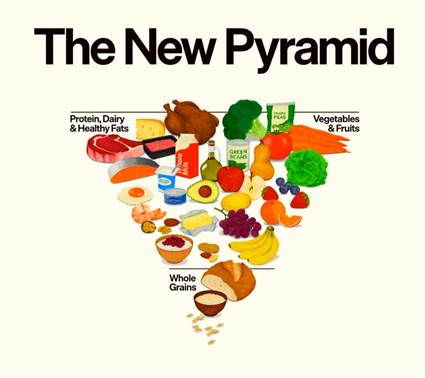
The new pyramid promotes the motto “eat real food,” encouraging people to reduce their intake of processed foods, limit added sugars, and choose more whole foods. While dietitians do not disagree with that goal, the guidance does not address the practical challenges many people face in making these changes. It also does not provide details on appropriate portion sizes or how to select healthier sources of protein and fats.
The updated model places greater emphasis on protein, particularly meat and fats, recommending roughly 1.5 to 2 times the amount suggested in previous guidelines. It also includes higher amounts of saturated fat than earlier recommendations. Some nutrition experts have noted that this approach may not fully align with widely accepted evidence‑based recommendations that prioritize lean proteins and heart‑healthy fats.
New U.S. Department of Agriculture (USDA) key recommendations by food group:
- Protein: Both animal-based (eggs, poultry, seafood, red meat) and plant-based proteins (beans, lentils, nuts, seeds, and soy) are encouraged with a visual focus on animal proteins.
- Dairy: Choose whole/full- fat dairy without added sugars and aim for 3 servings per day.
- Vegetables and fruits: Choose both, however focus on their whole, fresh options rather than juices or other types.
- Whole grains: Choose whole grains like oats, quinoa, brown rice and whole wheat bread, instead of white breads and other refined grains (baked goods, white rice, white flours, white pasta).
- Fats: The pyramid now includes butter, beef tallow, olive oil, nuts, seeds and avocado and increases the recommended portion sizes than previously recommended.
- Added sugars and ultra-processed foods: No or minimal intake for children under the age of 4. Highly processed packaged foods are discouraged, which is new as it focuses on the word “packaged”.
- Beverages: Choose water and unsweetened beverages to support hydration.
How MyPlate supports balanced eating
In 2011, the United States Department of Agriculture (USDA) released MyPlate, a visual tool that shows how food fits into a meal by dividing a plate into portions.
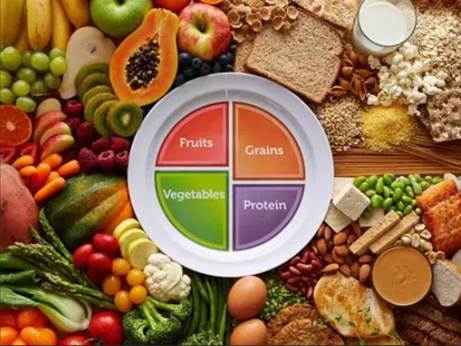
The visual tool is simple, practical and grounded in current evidence-based recommendations that emphasize balance, variety and proportion as the principles for healthy eating.
Dietary patterns associated with long-term health are rich in vegetables, fruits, whole grains, legumes and healthy fats, with varied protein sources and limited intake of highly processed foods. These patterns resemble plant-forward approaches that identify a varied and balanced diet, aligning closely with the MyPlate model. It demonstrates how each food group fits into our daily meals patterns and builds a balanced diet where half of one’s plate should contain vegetables and fruit with the other half split between starchy carbohydrates and protein.
Protein recommendations: How much is too much?
While protein is essential, it should not be consumed in excess. The quality and source of protein matter just as much as the amount.
We encourage a variety of protein sources, including both plant‑based and animal‑based options. Low‑fat dairy is also important—not just the type you choose, but the amount you consume. The new USDA guidelines do not include plant-based protein options, but foods such as beans, lentils, nuts, seeds and tofu still serve as excellent sources in a healthy diet.
If you are healthy and have no unique metabolic needs, fill one-fourth of your plate with protein and limit each meal to one serving, which is about 3 ounces — roughly the size of a deck of cards or the palm of your hand.

Healthy fats vs. saturated fats
The new USDA dietary guidelines highlight fat as an important part of the daily diet but do not distinguish between types of fats. We have learned that not all fats are the same. Choose unsaturated fats — such as those in olive oil, avocados, nuts, seeds and fatty fish — to support heart health and build a balanced diet. Limit saturated fats found in fatty cuts of beef, butter and full-fat dairy.
The emphasis should be on choosing healthier fats. Fats are an important source of fuel for the brain and support how the body absorbs vitamins. Aim for getting around 30% of daily calories from unsaturated fat sources and less than 10% of daily calories from saturated fats.
What the new USDA dietary guidelines mean for everyday balanced eating
So what does this mean for you? It means that balanced eating is still the goal! Filling half your plate with fruits and vegetables remains a strong foundation. Choosing whole grains more often than refined grains continues to be beneficial. This includes food like brown rice, oats, quinoa, rye and items made from wheat.
Support a nutrient- diverse diet by consuming a variety of protein sources rather than relying heavily on one type. Favoring unsaturated fats while moderating saturated fats remains wise, particularly for heart health. You do not need to dramatically increase animal protein or assume unlimited fats are harmless unless your healthcare team has specifically recommended it.
While nutrition messaging has evolved over the decades as research has improved, the core principles of balanced eating remain reliable. When your meals consistently include colorful vegetables, fruits, whole grains, varied protein sources and healthy fats, you are building a pattern that supports long-term health.
Have more questions specific to your child’s medical needs?
Ask your provider to speak with a registered dietitian in your clinic or during your child’s inpatient stay.
Or search our database of credentialed nutrition and dietetics practitioners by location, specialty, language or insurance and payment options at: Find a Nutrition Expert.
Get more expert health advice delivered to your inbox monthly by subscribing to the KidsHealth newsletter here.
Learn more about CHOC’s Clinical Nutrition Program
At CHOC, we specialize in providing a full continuum of pediatric nutrition services, including inpatient and outpatient services, depending on our patients’ needs.