
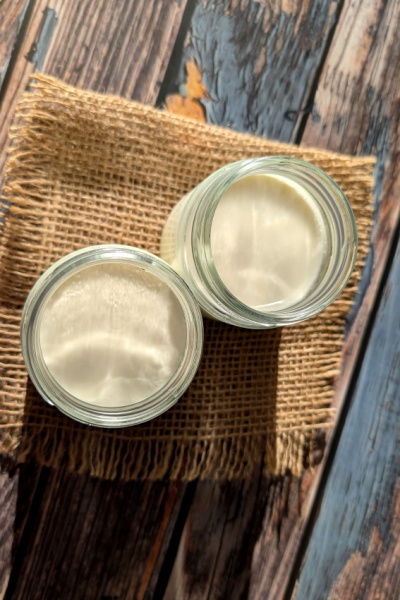
Yogurt
- 0.5 gal Whole Milk
Starter culture (choose one)
- 5 cup 24-hour SCD Yogurt (from previous batch), or
- Commercial starter with only live bacteria (no additives)
Directions
Approved bacteria strains include:
- Lactobacillus bulgaricus
- Streptococcus thermophilus
- Lactobacillus acidophilus
Equipment Needed
- Heavy pot
- Thermometer (recommended for accuracy)
- Glass jars
- Yogurt maker, Instant Pot (yogurt setting), or warm oven/light method
Step 1: Heat the milk
- Pour milk into a pot.
- Heat slowly to 180°F (82°C), stirring occasionally.
- This denatures milk proteins and improves texture.
- Remove from heat.
Step 2: Cool the milk
- Let milk cool to 110°F (43°C).
- This is critical — hotter will kill bacteria.
Step 3: Add starter
- In a small bowl, mix starter yogurt with a bit of warm milk.
- Stir this mixture gently back into the pot.
Step 4: Incubate
- Pour milk into jars.
- Incubate at 105–110°F for 24 full hours.
Step 5: Chill
- Refrigerate at least 6–8 hours to fully set before eating.
SCD Notes
- Allowed: After full 24-hour fermentation
- Not allowed: Store-bought yogurt, kefir, or yogurt fermented <24 hours
- Honey may be added after fermentation, never before
Flavoring Ideas
Add after fermentation:
- ½ tsp Honey
- Fresh or cooked fruit such as:
- Banana
- Apples (cooked or applesauce)
- Berries
- Pears
- Cinnamon or vanilla bean
- Nut butter (if tolerated)
Texture Adjustments
- Thicker yogurt: Strain through cheesecloth
- Drinkable yogurt: Stir in a little water or fruit purée (after fermentation)
Troubleshooting (common issues)
- Too thin: Milk not heated high enough or incubation too cool
- Too sour: Normal for 24-hour yogurt; improves after chilling
- Separated whey: Stir gently or strain
Nutrition Facts
| Total Servings | 4 |
| Single Serving Size | 1/2 Cup of Yogurt |
| Amount Per Serving |
| Total Fat | 4 g |
| Carbohydrates | 2 g |
| Protein | 4 g |