Reviewed by Leeza Eguerra, blood bank supervisor at Rady Children’s Hospital Orange County (Rady Children’s)
Learn about each step of the donated blood journey
When you donate blood at Rady Children’s, it begins an important journey long after you leave the donation center. Each gift of donated blood goes through careful processing and safety testing to ensure it’s safe, effective and ready to help patients in need. From screening and separating blood into lifesaving components to storing and distributing it, we design every step to protect recipients and make the greatest possible impact.
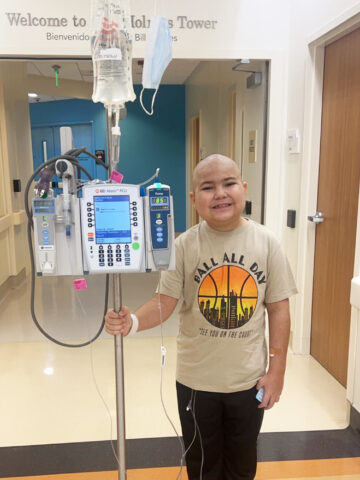
For children who are sick, injured, or need special medical care, donated blood can be life-changing. Every drop follows this carefully guided journey to help kids heal, grow stronger, and feel better.
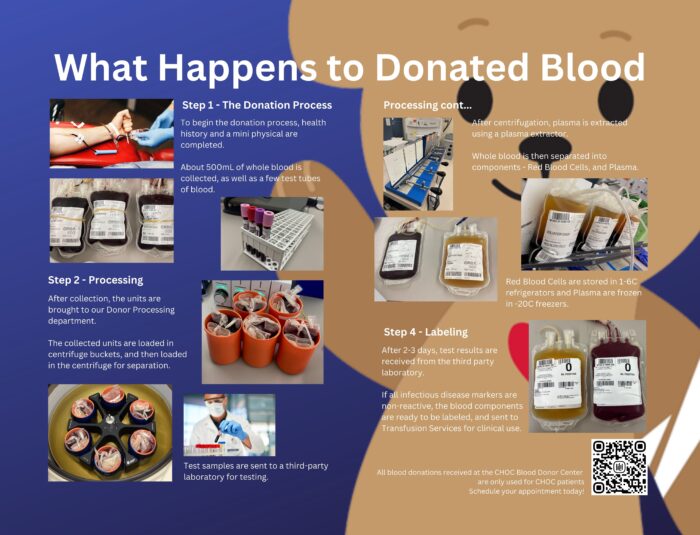
Step one: Donation
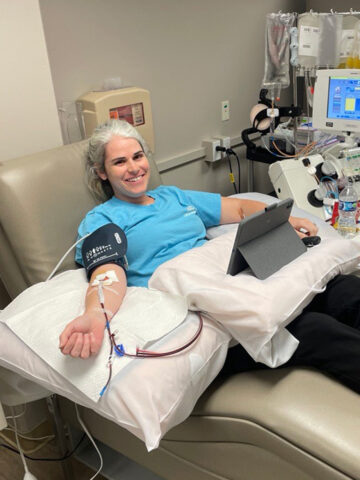
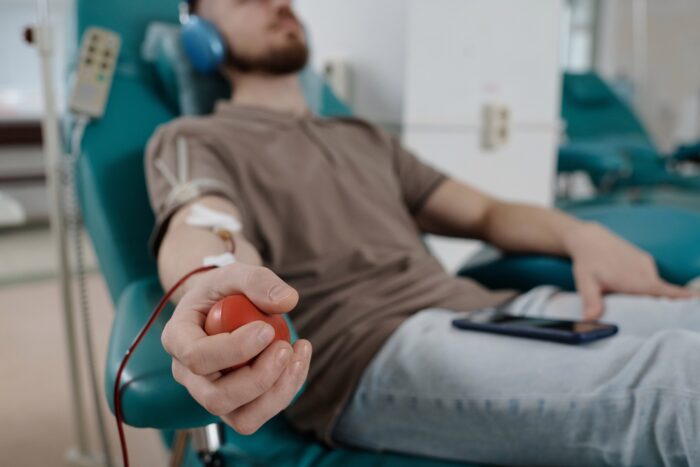
A caring, eligible donor comes in for their blood donation appointment.
- They answer a few health questions and complete a brief physical to check their overall health.
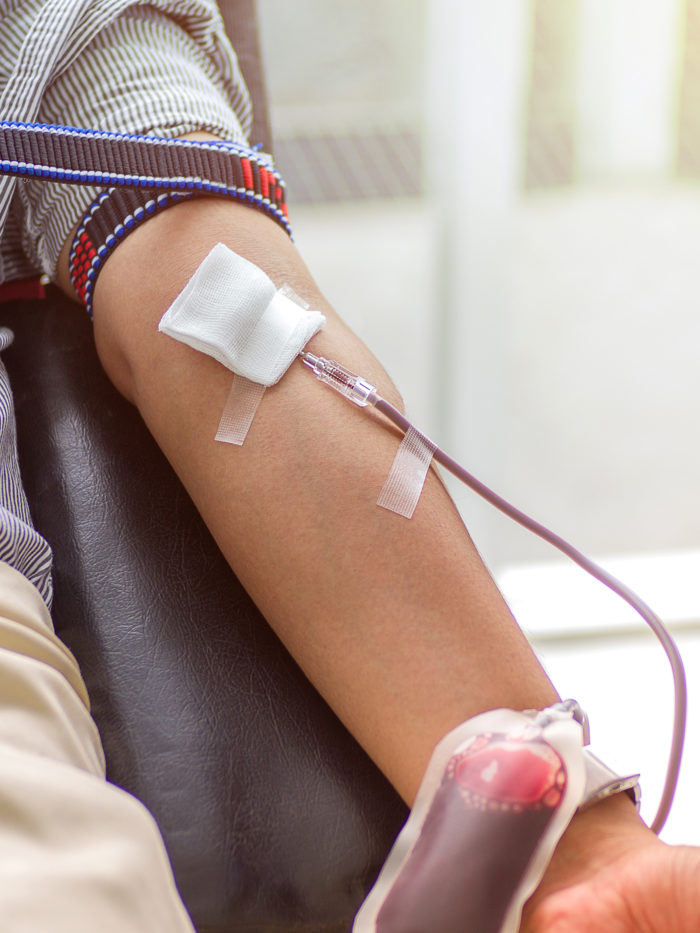
- We collect about one pint of donated blood, along with a few small test tubes for safety testing. The process takes only eight to ten minutes.
- We label everything with matching barcodes so we can track the blood safely.
- We keep the donated blood cool and send it to a processing center, while we send the test tubes to the lab.
Step two: Processing
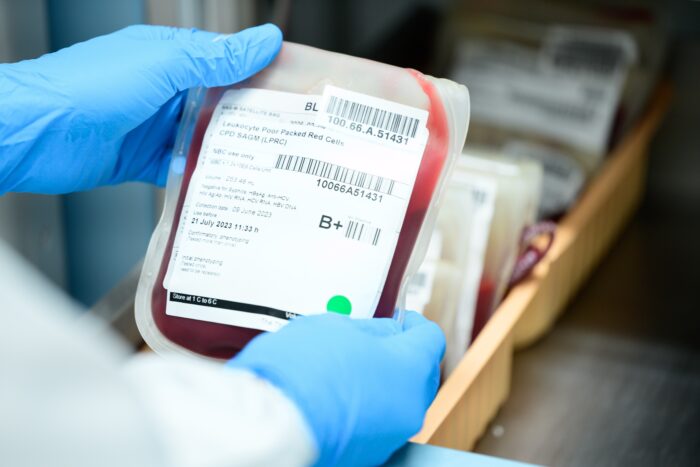
At the processing center, we carefully prepare the donated blood to help as many children as possible.
- First, we remove white blood cells to reduce the chance of reactions in young patients.
- We separate the blood into components: red blood cells and plasma.
- We package each component into a standard “unit” that doctors can use when caring for children.
Step three: Testing
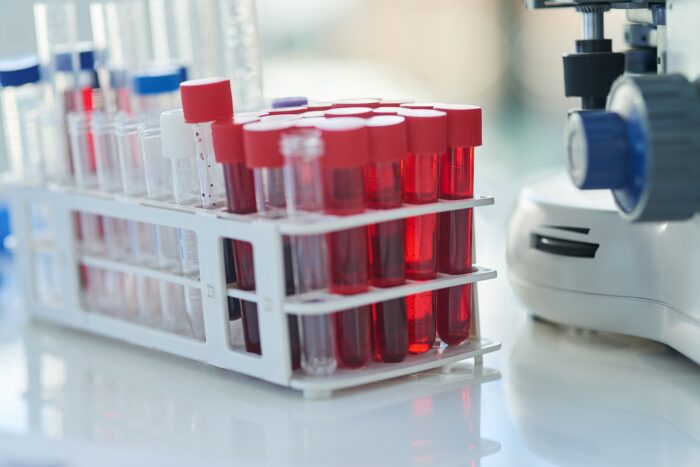
Safety is very important, especially for kids.
- A third-party laboratory performs the testing.
- The laboratory sends back results quickly, usually within 24 to 48 hours.
- If a problem arises, we do not use the donated blood and notify the donor privately.
Step four: Storage
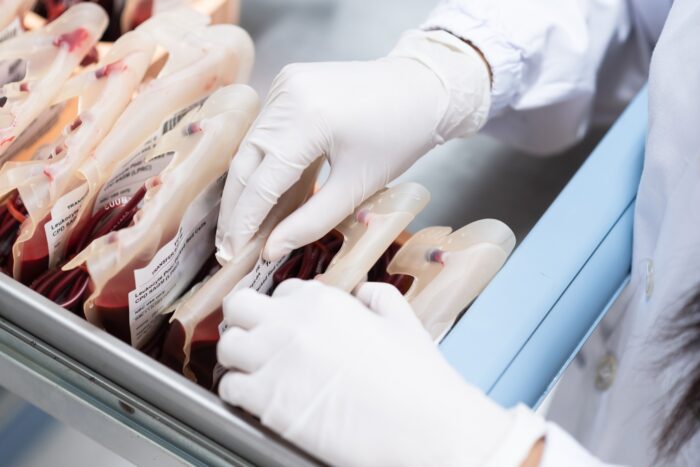
After completing testing, we store the donated blood until patients need it.
- We keep red blood cells refrigerated for up to 35 days at Rady Children’s, without additives.
- We store platelets at room temperature and gently agitate them to keep them fresh for up to seven days.
- Plasma and cryo are frozen and can be stored for up to a year.
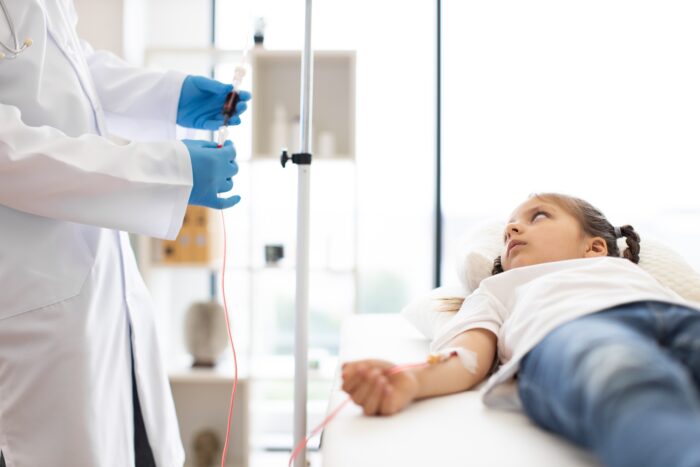
Step five: Transfusion
This is where donated blood makes a real difference.
- Doctors decide if a child needs a transfusion and which component of the blood will help most.
- Red blood cells help children with anemia or after surgery feel stronger and get more oxygen.
- Platelets help children whose bodies can’t make enough on their own, such as during cancer treatment.
- Plasma helps children with serious infections, burns or liver problems.
Why donated blood matters for kids and teens
Kids and teens fighting cancer, premature babies in the NICU, trauma patients in the emergency department, and people undergoing surgeries and other medical procedures need blood transfusions.
Each pint of donated whole blood can save up to three lives. Consider becoming a blood donor this National Blood Donor Month.